





Parents & Families
Welcome to the Bruin family!
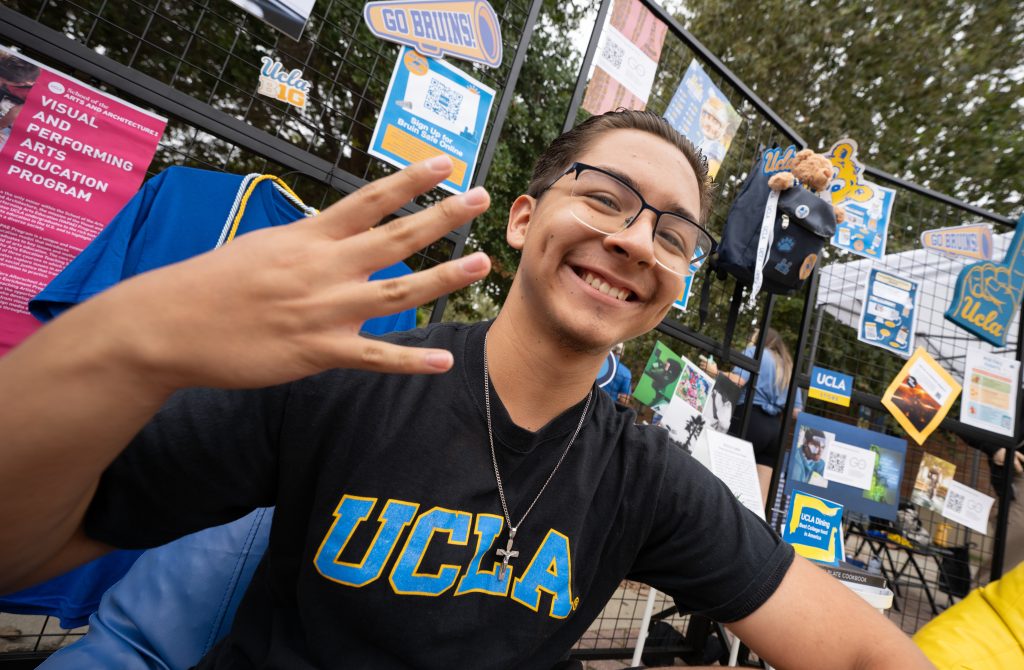
As your student embarks on their Bruin journey, you’re part of it too. We’re here to keep you connected to campus life, informed about your student’s experience, and confident in your ability to support their academic, social, and personal growth.
At UCLA, we believe that students thrive when their families are engaged partners in their success. Whether it’s navigating campus resources, understanding transitions, or celebrating milestones, consider us your go-to connection committed to helping your student make the most of their time at UCLA and beyond. Together, we’re part of a larger Bruin story that continues to grow, connect, and inspire.
We define family broadly. A parent is any caregiver or guardian actively supporting a student, including mothers, fathers, aunts, uncles, grandparents, siblings, adoptive parents, and stepparents. If you are helping a Bruin through college, this is for you.
Support your student
Frequently Asked Questions
Academics
What is the quarter system?
A quarter is a 10-week term, and the UCLA academic year is divided into three quarters: fall, winter, and spring. Summer is also a quarter, but it sits outside the academic year and is not mandatory. An academic year has 146 days of instruction.
Students may enroll in up to 19 units per quarter, which usually means three or four courses. Three classes per quarter is recommended for incoming first-years so they can adjust to the pace.
Learn more about academic policies.
How large are classes at UCLA?
Class size varies. U.S. News & World Report recently reported UCLA’s student-faculty ratio as 20:1 and noted that 47% of classes have fewer than 20 students. Many lower-division and introductory classes are larger, while discussion sections and upper-division courses are smaller.
See the U.S. News UCLA profile.
If my student is undeclared, how do they choose a major?
An undeclared student is not at a disadvantage, and they generally have until the end of their second year to declare. With more than 125 majors to choose from, it can take time to decide; the average Bruin changes their major 2.5 times.
Students can narrow their choices by exploring classes and areas of interest, talking with academic counselors, and using resources like the Career Center and Alumni Career Engagement. Students tend to succeed when they study subjects they care about.
How do students declare a major or pursue a double major?
Students declare a major through their college or school’s academic advising office. They meet with a department academic counselor to review requirements, confirm prerequisites, and discuss their goals, then submit a Declaration of Major form.
For a double major, students must meet the requirements for both majors and submit forms for each, often with approval from both departments. Advisers help plan coursework and keep students on track for graduation.
See how to add a major or minor.
How can students enroll in a required class if it’s full?
Students can join a wait list when a class fills. A wait list does not guarantee enrollment, but it improves the odds: when an enrolled student drops, a seat opens and is filled by the next person on the list.
A wait list position within 10% of capacity (for example, number five in a class of 50) signals a good chance of enrollment. Many students drop after the first meeting, and departments sometimes raise the enrollment cap, which automatically pulls students in from the wait list.
Students should not assume they will be added. They can move backward on a list if PTE numbers are used, since those override wait list status. Wait lists run through Friday of the second week of classes unless a department clears them earlier, which can happen on the first day for some sections, especially labs.
What is a Petition to Enroll (PTE) number?
A Petition to Enroll (PTE) number is a five-digit code that lets a student enroll in a restricted or full class. Paired with the nine-digit course ID, it guarantees enrollment. PTE numbers are issued at the discretion of the instructor or department, so students should ask the department office about its process.
Most class restrictions relate to class level or major and are noted in MyUCLA and the Schedule of Classes. A PTE number may be issued when a department authorizes selective enrollment in a full class, makes an exception to published restrictions, or overrides a closed-class wait list.
If the instructor assigns the PTE electronically, a notice appears in MyUCLA with an enrollment link. If it is assigned manually, the student enrolls using the nine-digit course ID and the PTE number. A PTE is valid through the last day to add a class on MyUCLA.
Read about class restrictions.
When are enrollment appointment times released?
Enrollment appointment times are released on MyUCLA shortly after the Schedule of Classes is posted for the upcoming term. Students can view their exact date and time in the MyUCLA Class Planner under “Enrollment Appointments.”
Each student gets two appointments, First Pass and Second Pass, and some students with priority status receive an earlier Priority Pass. Times are assigned based on completed units and priority status.
Read about enrollment appointments.
My student is having trouble registering for classes. What should they do?
Your student should first confirm they are enrolling during their correct pass, since they cannot enroll outside their assigned time. Next, they should check for holds on their account, such as unpaid fees or incomplete requirements, which block enrollment until resolved.
Some courses have prerequisites or are restricted to certain majors. If problems continue, your student can contact their academic counseling unit or the Registrar’s Office at reginfo@registrar.ucla.edu.
How are AP credits handled at UCLA?
UCLA awards college credit for AP exams with scores of three or higher, and the specific credit depends on the college or school the major belongs to.
For majors in the UCLA College, AP credit is reviewed yearly and subject to change. If an AP exam, IB exam, or college course covers duplicate material, UCLA awards credit for only one. AP units count toward graduation and do not count against the unit maximum for the bachelor’s degree, but AP credit does not satisfy General Education requirements.
Learn more:
How do students access academic advising?
Students access advising through the advising office for their college or school. New students receive counseling during orientation, and current students can book one-on-one appointments, attend drop-in hours, or connect by email or online portal. Advising helps students fulfill requirements, set degree goals, and decide on a major.
College and school advising offices:
- College of Letters and Science
- School of the Arts and Architecture
- School of Education and Information Studies
- Henry Samueli School of Engineering and Applied Science
- Herb Alpert School of Music
- School of Nursing
- Meyer and Renee Luskin School of Public Affairs
- Jonathan and Karin Fielding School of Public Health
- School of Theater, Film, and Television
To reach a departmental adviser, see the individual department.
Read about academic counseling.
What tutoring or academic support is available?
Free workshops and tutoring are offered across campus to help students use their time well and strengthen their work. Options include:
- Library workshops: research workshops that build skills and critical thinking about the research process.
- AAP Peer Learning: tutoring for Academic Advancement Program (AAP) students in many popular courses.
- UCLA Undergraduate Writing Center: individualized consultations at any stage of writing, led by peer learning facilitators (PLFs).
- American Culture & Conversation Program: an eight-week program from the Dashew International Center for international students and scholars.
Learn more:
How often should students see their academic adviser?
Students should meet with an adviser at least once a year to confirm they are on track. Meeting before each quarter, ideally before registration opens, helps students make sure the classes they pick move them toward their degree.
Regular advising helps students catch problems early and learn about course suggestions, scholarships, and graduate school. The Center for Academic Advising in the College (CAAC) also offers Remote Engagement and Advising in the College Hub (REACH), a virtual hub with peer counselors and graduate counseling assistants for quick questions.
How should students handle exam conflicts?
Students should avoid choosing classes that share a final examination code or that have conflicting meeting times or multiple same-day finals. If a conflict is unavoidable, they should talk with each instructor at the first class meeting to work out an arrangement.
It is the student’s responsibility to know exam times and avoid conflicts. Out-of-class midterm dates and times appear in the Schedule of Classes under class notes. Final exam locations are posted Monday of the ninth week in the Schedule of Classes and MyUCLA.
Learn more:
What is Honors at UCLA?
UCLA offers several types of honors:
- Honors Programs (College Honors): more rigorous coursework for students in the College of Letters and Science, plus scholarships, specialized counseling, the individual major program, and the chance to graduate with “College Honors.”
- Departmental Honors: awarded to students who complete a thesis or specialized research project in their major. Students usually decide near the end of the third year and finish the work in their final year. Contact the department for details.
- Latin Honors: awarded to graduating students who meet academic achievement standards, at the levels of summa cum laude, magna cum laude, and cum laude.
- Honors Societies: service and excellence organizations for high-achieving students, coordinated by the Office of the Dean of Students.
Can I access my student’s grades?
Not without your student’s consent. The Family Educational Rights and Privacy Act of 1974 (FERPA) treats college students as responsible adults who decide who receives their educational records. Parents are not automatically granted access, so we encourage you to talk with your student if you need academic information.
Your student can grant access by setting up an authorized user account for a parent or family member. UCLA does not release private or restricted information over the phone or by email, even with consent.
Campus Safety
How do families and students receive safety and evacuation information?
UCLA sends urgent safety and evacuation information through BruinALERT, which reaches students and registered family members by text, email, and phone during emergencies on or near campus. Families and students can also find safety updates, emergency procedures, and evacuation guidance through BruinSafe Online.
The UCLA Police Department (UCPD) and campus officers coordinate with local authorities during emergencies. Make sure your contact information is current so you receive alerts promptly.
Learn more:
What is BruinALERT and how do I sign up?
BruinALERT is UCLA’s emergency notification system, sending active emergency alerts and public safety notices to the campus community by email, text, and phone, and posting them to BruinSafe Online and the Bruins Safe App. Students and family members can register for BruinALERT.
Students and family members may receive different alerts depending on the severity of the emergency. We also recommend downloading the Bruins Safe App for the most current information.
My student needs support after an emergency. What are their options?
UCLA offers several resources to help students through an emergency:
- Economic Crisis Response Team: helps students facing financial emergencies connect to funding and resources.
- Case Management Services: supports students with basic needs, including housing and food.
- Counseling and Psychological Services: provides counseling, crisis intervention, and referrals.
Encourage your student to reach out to these services directly, or contact the offices yourself for guidance on how to support them.
Are off-campus apartments and nearby neighborhoods safe?
Many off-campus apartments are in safe areas, and students are encouraged to stay aware of their surroundings and follow personal safety practices. UCLA’s safety resources extend beyond campus: BruinALERT sends emergency notifications by text, email, and phone, and UCPD patrols both campus and nearby neighborhoods.
The Office of Campus and Community Safety, led by Associate Vice Chancellor Steve Lurie, coordinates safety measures and emergency plans for on- and off-campus areas. Under the Jeanne Clery Act, UCLA also publishes annual security and fire safety reports with crime statistics, security policies, and personal safety guidance.
Learn more:
How does UCLA handle HIPAA and health information with families?
UCLA follows federal HIPAA (Health Insurance Portability and Accountability Act) rules and cannot share a student’s detailed medical information with family members without the student’s written consent. The university can still offer families general health and wellness resources and guidance on supporting their student.
Students who choose to share health information can complete a HIPAA release form authorizing disclosure to a parent, guardian, or other designated person.
Career
What career resources does UCLA offer new graduates?
The UCLA Career Center supports new graduates with one-on-one career counseling, resume and cover letter review, job search strategies, and interview prep. Graduates can also access job and internship listings, career fairs, networking events, and employer information sessions for Bruins.
Beyond the Career Center, Alumni Career Engagement connects graduates with mentoring and programs that link them to experienced professionals in their fields.
What support does UCLA offer students looking for internships or jobs?
Several resources help students find internships and jobs:
- Handshake: the platform that connects Bruins with internship and job postings from employers hiring UCLA students, plus Career Center events, fairs, and workshops.
- UCLA Career Center: a job and internship search hub with articles, undergraduate tools, exploration guides, one-on-one advising, self-assessments, networking tips, and resume support.
- UCLA ONE: a platform built to connect students and alums worldwide, where students can search for jobs, find mentors, get career advice, and join Bruin networking groups.
How can my student network with UCLA alums?
UCLA Alumni Affairs offers several ways for students to network with alums:
- Alumni Mentor Program: pairs students with an alum mentor who guides them through career exploration and the internship and job search.
- Bruin Development Academy: hands-on technical training and soft-skill practice for competitive internships and entry-level roles.
- Dinners for 12 Strangers: an annual UCLA tradition that brings students and alums together for informal, community-building dinners.
- Student Alumni Association (SAA): a 100-member student volunteer group that connects the student body with alums through events like Entertainment Networking Night, STEM Networking Night, Interview With a Bruin, and Dinners for 12 Strangers.
- UCLA Epicenter: connects students with real-world industry projects through project-based learning.
Explore connecting with alumni.
Are there internship or job fairs at UCLA?
Yes. The UCLA Career Center events calendar lists all internship and job fairs along with workshops and other events open to students. Handshake also posts campus career fairs.
Events
Bruin Day
My student was just accepted. When is Bruin Day and how do we register?
Bruin Day is an annual event for newly admitted students and their families to explore campus, meet faculty, staff, and students, and learn about academic programs, student life, and campus resources. UCLA emails admitted students with the date, schedule, and registration instructions.
Once registration opens, you can sign up online and RSVP for sessions such as academic fairs, student panels, and campus tours.
How do accepted students commit to UCLA?
Accepted students commit by submitting a Statement of Intent to Register (SIR) to officially accept their admission offer, through MyUCLA or in person at Bruin Day. The full process includes:
- Completing the SIR, a Statement of Legal Residence (if required), and a Parent/Guardian Contact form.
- Selecting an official UCLA email address.
- Paying a $250 registration deposit, if required. The deposit holds their place in the entering class and applies toward registration fees. It is not refundable if the student later decides not to enroll.
Read how to accept your offer.
Orientation
How do students and families register for orientation?
New Student Orientation is mandatory for all new first-year and transfer undergraduates. Students first complete the Pre-Orientation Planner survey, available in MyUCLA after submitting the SIR, then log in to MyUCLA to reserve an orientation session.
Family members register separately for New Parent & Family Orientation through the reservation system on the New Student & Transition Programs website. Registration usually opens in the spring.
Learn more:
- First-year orientation
- Transfer student orientation
- International student orientation
- Family orientation
What happens during family orientation, and what is the schedule?
Families attend New Parent & Family Orientation, a one-day program that welcomes families and introduces campus resources. It includes staff and student presentations on academics, campus safety, financial aid, housing, and student life, a chance to ask questions, and often lunch and a resource fair.
Students attend a separate New Student Orientation, two days for first-years and one day for transfers, focused on academic advising and course enrollment.
Read about family orientation.
What if my student cannot attend orientation?
Your student can request an exception by contacting the New Student & Transition Programs office at (310) 206-6685 or through the MyUCLA Message Center. Exceptions are reviewed only for financial assistance, health concerns, visa processing, and other extenuating circumstances.
Requests are reviewed in the order received, and your student receives an email with the decision within seven to 10 business days.
Read about first-year orientation.
Where do families park for orientation?
Families can park in the designated visitor parking structures. Use the campus maps below to find a structure near your destination, including accessible spaces.
Families who register for orientation usually receive a more detailed email closer to their session.
Why are orientation charges on my student’s bill?
New Student Orientation includes fees for on-campus housing and meals, billed to the student’s UCLA BruinBill. The $250 SIR fee does not cover the orientation session fee.
No payment is due when students reserve a session. Session fees are billed in September and due in October.
Bruin Family Weekend
When is Bruin Family Weekend, and what is the schedule?
Bruin Family Weekend is a two-day event held each fall, typically near the end of October or beginning of November. Dates are usually announced in the spring, and a schedule of events is shared in the fall.
Visit the Bruin Family Weekend website.
How do families register for Bruin Family Weekend?
Family members receive an email notification to register in the fall, with a registration link specific to each family member. If you do not receive a registration email, contact the team at bruinfamilyweekend@support.ucla.edu.
Registration usually closes about two weeks before the event. Onsite registration is not permitted.
How do families buy football tickets for the Bruin Family Weekend game?
The Bruin Family Weekend registration email includes information on buying tickets to the football game held during the weekend. Families can purchase tickets alongside their registration, or buy football tickets separately beforehand.
Do students need tickets to Bruin Family Weekend?
Students do not need tickets to attend Bruin Family Weekend programming on campus and are welcome to join their families. They do need a ticket to attend the football game.
What if a family did not receive the invitation?
The Parent & Family Association announces on social media when registration opens. If you did not receive a registration email, contact the team at bruinfamilyweekend@support.ucla.edu.
Commencement
When are commencement ceremonies, and what are the details?
Graduation weekend always falls in mid-June, though exact times and details vary each year. All current information is posted on the UCLA Commencement website.
Visit the Commencement website.
How do students receive commencement and departmental ceremony tickets?
Students order College Commencement and departmental ceremony tickets through the Commencement feature on MyUCLA. A ticket request period typically runs from late April to early May, when eligible graduates choose a ceremony time (11 a.m., 3 p.m., or 7 p.m.) and request one free graduate ticket and up to four free guest tickets.
For departmental ceremonies, students can request up to four free guest tickets and buy additional guest tickets, if available, for $20 each.
Read about commencement ticketing.
How can families request extra commencement tickets?
Graduates receive one free graduate ticket and up to four free guest tickets for the College Commencement ceremony. Students who choose the 7 p.m. ceremony may receive a small number of additional free guest tickets through a waitlist. The 11 a.m. and 3 p.m. ceremonies fill up, so no extra guest tickets are available for those.
For departmental ceremonies, students can request up to four free guest tickets, with additional tickets available for $20 each when offered.
Read about commencement ticketing.
How do students get their cap and gown?
Students purchase their regalia through the official UCLA Campus Store. The Grad ETC Bachelor Unit includes a degree tassel, cap, and gown.
Order regalia from the Campus Store.
Are commencement ceremonies livestreamed?
Yes. The College Commencement ceremonies are typically livestreamed each year. Livestream links are posted at commencement.ucla.edu near the time of commencement.
How does parking work for commencement weekend?
All visitors must buy a valid parking permit through the Bruin ePermit System, where your license plate serves as your permit. The Commencement website notes which structures are available each year. If you attend ceremonies on multiple dates, you can select multiple dates when buying your permit. Permits cannot be refunded or transferred.
Visitors driving to campus should note:
- Buy in advance: permits are available online through the Bruin ePermit Event Parking Portal typically starting May 1. Buying ahead helps you skip lines at the campus pay stations.
- High demand: parking fills quickly on a first-come, first-served basis. Arrive at least 30 minutes before your ceremony. If redirected to an alternate area, no additional permit is needed.
- Limited support on the day: phone and email support is typically unavailable on commencement day. Use Ask Transportation for self-service help.
Housing & Dining
How does the housing guarantee work?
Newly admitted first-years who submit a housing application by the deadline are eligible for a guaranteed four consecutive years of housing, and newly admitted transfer students who apply by the deadline are eligible for a guaranteed two years.
Returning undergraduate residents select housing for the next year through UCLA Housing Room Sign Up (RSU), which typically begins in March. Eligible students must submit an application and take part in RSU to receive a housing offer; students who do not select a room are not extended an offer.
When do new students receive move-in information?
New students receive fall move-in dates, times, and room assignments by email and through the UCLA Housing Portal toward the end of August.
When are move-in and move-out dates?
UCLA Housing sets move-in and move-out dates each year and assigns students specific move-in days and times through the Housing Portal before the term begins. Move-in typically spans several days in mid- to late September before fall quarter. Move-out is at the end of spring quarter, and students must vacate by 10 p.m. on their designated day.
If a student cannot move in or out on their assigned day, they should contact UCLA Housing in advance to discuss arrangements.
Where do families park for move-in?
Each student moving into on-campus housing is assigned an unloading zone, viewable in the move-in information on their Housing Portal. On arrival, signs and staff direct you to your zone, where True Bruin Ambassadors help carry belongings to your student’s room and satellite stations encode the BruinCard for room access.
After unloading, you are directed to long-term parking, with three hours free. To stay longer, move your vehicle to a pay-by-space within the lot.
Read about moving into on-campus housing.
How are housing assignments and room types determined?
Undergraduate housing assignments use a randomized priority process that matches the preferences students submit in their application (room type, lifestyle choices, and more) to available spaces. If a first choice is unavailable, Housing offers the next available space, and roommate matching uses the preferences entered in the application.
Room types depend on availability and demand, so not all applicants are offered singles or specific room types; most are assigned the highest preference available within capacity. Transfer and late-admit students who apply before the deadlines are included in the same process, with offers made as space allows.
Read about housing assignments.
How can my student change rooms or roommates?
Before the academic year begins, residents can submit a Change of Assignment Request (CAR) after accepting an offer to request a different building, room type, or space. CARs depend on availability and are not guaranteed. During the year, students can request room swaps or transfers during designated Open Transfer periods through the Housing Portal.
Any room or suite change requires coordination with housing staff, such as Resident Directors for the residence halls or University Apartment administration, before a move.
Learn more:
How can I send packages to my student on campus?
On-campus residents receive mail and packages at the Housing Mail Center in Delta Terrace at Sunset Village. For move-in, do not send packages until one week before your student’s scheduled move-in day. Reach the Mail Center at (310) 206-1767.
Use this mailing address format:
- Student’s First & Last Name (as registered at UCLA) 330 De Neve Drive, Building [X], Room [#] Los Angeles, CA 90024
Is summer housing available?
Yes. UCLA offers Summer Session housing for students enrolled in summer programs or courses through a separate summer application, typically on campus. Students living on campus during spring term can request a “stay through” via the Housing Portal to remain between the academic and summer contracts if they have an eligible summer contract.
Learn more:
What resources help students find off-campus housing?
UCLA Housing’s Community Housing Office offers a database of rental listings for neighborhoods near campus, including shared apartments, vacant units, rooms in private homes, studios, and short-term sublets. Full-time students can search these listings for free.
Visit the Community Housing Office.
Can students return to UCLA Housing after living off campus?
Yes, though it is not guaranteed. Students who lived off campus or in sorority or fraternity housing can apply for UCLA Housing again through the Housing Portal. They are treated as lottery applicants, often joining a waitlist, and offers are made only as space allows.
Read about the undergraduate lottery application.
What meal plans are available?
Meal plans are coordinated through UCLA Housing & Dining and offer several preset options with a weekly allotment of meals usable at approved dining locations. On-campus residents usually select a plan when accepting their housing contract and can request upgrades or downgrades through the Housing Portal.
Plan options:
- 19 Premier: flexible meals that carry over week to week within the quarter.
- 19 Regular: fixed weekly meals that do not carry over.
- 14 Premier and 14 Regular: mid-range plans with varying carry-over rules.
- 11 Premier and 11 Regular: lower-meal plans for students who eat fewer meals on campus.
- Summer plans: typically a 14-meal plan during summer session housing.
Learn more:
Parent & Family Involvement
What resources are available for parents and families?
The UCLA Parent and Family Association (PFA) supports families of UCLA undergraduates with resources, information, and a sense of community. Our resources include:
- Bruin Family Connect: a quarterly e-newsletter on university trends, campus resources, and how families can support their student.
- Bruin Family Insights: the PFA podcast, featuring UCLA staff, faculty, alums, students, and parents on the topics families ask about most.
- Parent and Family Guide: an in-depth guide to UCLA’s academic services, student life, and campus resources.
- Collegiate Parent Guide: a guide made with CollegiateParent on navigating college life and supporting students.
- Social media: follow the official PFA accounts on Instagram (@UCLA_Parents) and Facebook for accurate information. Many unofficial parent groups exist that are not affiliated with our office.
- Email: contact our office directly at mybruinis@ucla.edu with questions or for support.
Visit the Parent & Family Association.
How can I get involved as a parent?
Parents and family members have several ways to stay connected and get involved:
- Bruin Family Socials: year-round regional events hosted by UCLA families to build connections in the wider Bruin community. To sign up to host, choose a venue, date, and time, and the Parent & Family Association helps with the rest.
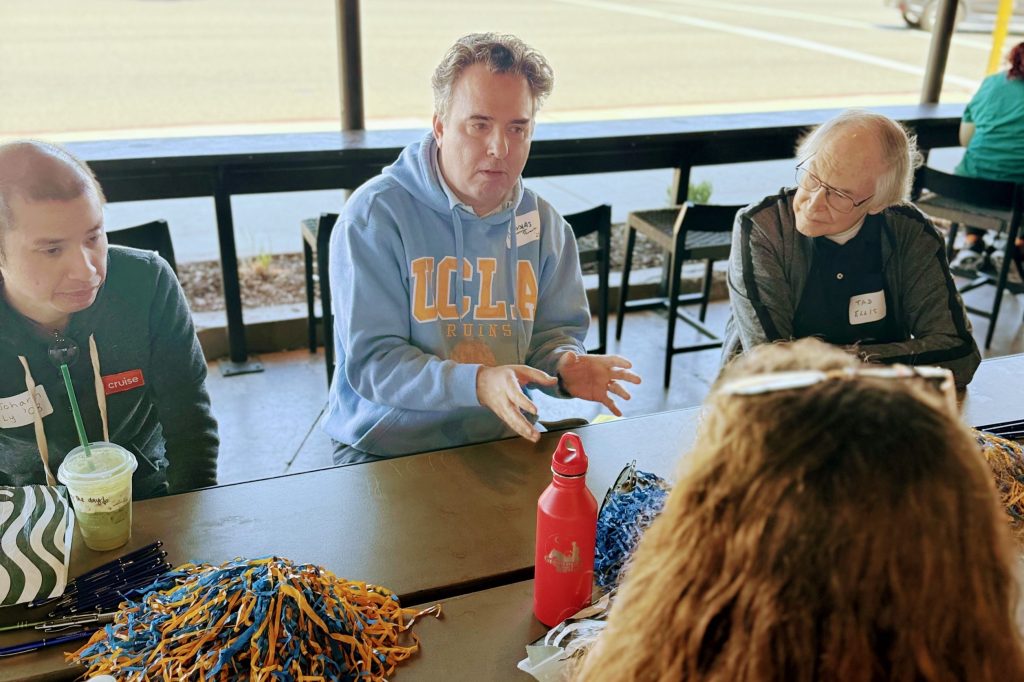
- Parents’ Council: the PFA’s premier volunteer organization, made up of family members who serve as University ambassadors, engage with current and prospective families, and represent the parent perspective. Applications are open each year from mid-April to mid-July.
Parking & Transportation
How do students get around campus?
Most students walk, bike, or scooter to and from campus, especially if they live on the Hill or in nearby apartments. Other options include:
- BruinBus: a complimentary year-round shuttle serving campus and the Wilshire Center.
- UCLA SafeRide: on-demand evening rides during the academic year.
- BruinAccess: paratransit for students and employees with permanent or temporary mobility needs.
Students may also drive, but parking on campus is extremely limited during the academic year.
How can students buy parking permits?
Campus parking is extremely limited and not guaranteed, especially during the academic year. During the academic year, students request a permit through UCLA Transportation’s quarterly Parking Application. During Summer Session, there is no application; permits are limited and sold to commuter and dorm students on a first-come, first-served basis through the Bruin ePermit Portal.
Starting January 1, 2026, UCLA Transportation may reduce or eliminate student daily parking permits. Daily permits were introduced in April 2022 to use temporary post-pandemic capacity, and with demand back to pre-pandemic levels, daily permits will be limited, may sell out, or may not be available. Students are encouraged to consider alternatives such as the Bruin U-Pass or Bruin Grad Pass for public transit, carpool, BruinBus, biking, and visitor parking. For questions, email transportation@ts.ucla.edu or call (310) 794-7433.
How do students find their way around campus?
UCLA offers a range of campus maps for buildings, parking, bus routes, accessibility, EV charging stations, bike stations, and more.
What is the best way to get to the airport from campus?
Students can take the Culver CityBus Line 6 or R6 to LAX directly from campus:
- Board the Culver CityBus Line 6 or R6 at the southeast corner of Strathmore Place and Westwood Plaza.
- Get off at the LAX City Bus Center.
- Take a free LAX Shuttle to the terminal.
Students may also use a rideshare service such as Uber or Lyft.
Student Life
How do students get involved in clubs and organizations?
UCLA has more than 1,200 clubs and student organizations, so students have ample opportunity to discover interests and meet like-minded Bruins. Areas include recreation, student government, arts and culture, business and entrepreneurship, and volunteering.
Explore clubs, organizations, and recreation.
Where are the best study spaces on campus?
UCLA Residential Life maintains a list of study spots on campus and on the Hill. Student favorites include:
How can my student join a fraternity or sorority?
UCLA’s Fraternity and Sorority Life (FSL) offers more than 60 Greek-letter organizations focused on community service, leadership, academic achievement, and personal growth. Students interested in joining can explore several paths:
- Recruitment: formal recruitment periods run each year at varying times depending on the council and chapter. These events let students meet members and learn each chapter’s values and activities.
- Panhellenic Council and Interfraternity Council: the Panhellenic Council (sororities) and Interfraternity Council (fraternities) organize recruitment, and students sign up through their council’s website.
- Cultural and professional Greek organizations: multicultural, professional, and interest-based groups offer community for students with specific cultural backgrounds, academic interests, or career goals.
Visit Fraternity and Sorority Life.
What is SOLE?
Student Organizations, Leadership & Engagement (SOLE) is the hub for student involvement at UCLA. Through SOLE, students explore clubs, access funding opportunities, and attend workshops that build leadership and organizational skills. The office also coordinates involvement fairs and events throughout the year.
Visiting & More
Where can I stay when I visit my student?
UCLA and Westwood offer several places to stay. On campus, the Inn at UCLA (formerly the UCLA Guest House) provides rooms for families and friends within walking distance of campus, and the UCLA Meyer and Renee Luskin Conference Center offers modern rooms in a conference setting. Nearby budget options within walking distance include the Westwood Inn and the Royal Palace Westwood. The W Los Angeles – West Beverly Hills and Hotel Angeleno are a short drive away, and many more accommodations are available in Westwood and the surrounding area.
When should I visit my student?
Family visits are always welcome. We encourage you to talk with your student about how often visits should happen and to leave room for them to build independence. Families are invited to Bruin Family Weekend each fall, around the end of October or start of November, with registration information usually coming out in late summer. Other good times to visit include events through your student’s organizations, sporting events, and Spring Sing.
How can my student or I buy tickets for UCLA events?
Tickets for many UCLA events, including athletics, theme parks, and museums, are available through the Central Ticket Office (CTO). The CTO has windows at 325 Westwood Plaza (ground level, across from Pauley Pavilion), open Monday to Friday from 10 a.m. to 4 p.m. You can also reach the CTO at 310-825-2101 during business hours, by chat at tickets.ucla.edu, or by email at cto@tickets.ucla.edu.
What is the Den Pass?
The Den Pass gives students access to all regular-season UCLA Football and Men’s Basketball games, available to purchase each year. First-year students can buy a 4s Up Pass, a Den Pass good for all four years, so they do not have to buy one annually.
What are fun things to do on campus?
Beyond UCLA athletics and student-sponsored events, popular campus attractions and events include:
- Bruin Family Weekend
- Center for the Art of Performance
- Geffen Playhouse
- Hammer Museum
- Mathias Botanical Garden
- Sculpture Garden
- Spring Sing
Read more about things to do at UCLA.
Where can I buy UCLA merchandise?
The UCLA Store in Ackerman Student Union is the official campus store for UCLA apparel and accessories, and it includes the campus bookstore, school supplies, and the UCLA computer store. All proceeds are reinvested into the UCLA community.
New to UCLA?
Start with the guides. These reading materials give you a full picture of UCLA and how to navigate it. Review them before your student begins.
Parent & Family Guide
Provides a comprehensive overview of academic requirements, housing and campus dining, financial matters, and student and campus life. Available in English, Spanish.
Parent & Family Association Digital Brochure
A summary of the Association and its major resources and programs for families. Read here.
CollegiateParent Insider Guide
UCLA-specific information plus articles to support you and your student. Available in English and Spanish.
Get involved
Parent’s Council
Our volunteer leadership group of family ambassadors. Applications for the 2026-27 Council are open through Sunday, July 12.

Bruin Family Socials
Informal regional gatherings hosted by current UCLA families. Host one in your area or join a nearby event.
Parent & Family Giving
Parent & Family Association Fund
Support current UCLA students through the Parent & Family Association’s funds, which provide essentials for students in need and scholarships for undergraduates.
Campus and Student Support
Gifts to this fund let our office provide food and other necessities for students in need while connecting more families to the University.
Parents’ Council Emeriti Scholarship
Established by parent volunteers in 2019, this fund has provided merit-based scholarship awards to eight undergraduates so far.
Stay Connected
Bruin Family Connect
View All
Connect Newsletter
The Fire Within: Leo Rochman’s Story of Resilience
The Fire Within: Leo Rochman’s Story of Resilience One thing that Leo Rochman learned from studying philosophy is that human beings persevere through adversity. This life lesson has shaped his…

Connect Newsletter
UC Inspires Honors UCLA Alumni

Alumni Spotlight
UCLA AAP Alumni Spotlight – Adrianos Facchetti ’01, J.D.
Bruin Family Connect is designed to keep parents and families in the loop. It highlights your role in supporting your student, shares helpful campus resources, and explores current university trends. You should receive it automatically but if you are not, please reach out to us at mybruinis@ucla.edu so we can get you connected.
Contact Us
Email us with any question, big or small, and we’ll answer or connect you with the right campus office. The Parent & Family Helpline is open Monday through Friday, 8 a.m.–5 p.m. PT.
Email: mybruinis@ucla.edu
UCLA Parent & Family Association James West Alumni Center 325 Westwood Plaza Los Angeles, CA 90095
Keep your contact information current so you continue to receive campus alerts, news, and event invitations. Email us with any change of address, email, or phone number.